Hunting Knife Bluework: An Embroidery Design Review
As an embroidery designer who frequently sources assets for both custom client orders and ready-to-stitch inventory, finding a machine embroidery design that balances aesthetic appeal with technical reliability is always the goal. When browsing Creative Fabrica embroidery collections for outdoor and camping themes, the Hunting Knife Bluework design immediately caught my attention. It promises a stylish knife and sheath motif that feels appropriate for hunting outfits and accessories without being overly aggressive or cartoonish. After evaluating this digital embroidery file for potential use in real-world projects, here is my honest assessment of how it performs beyond the screen.
First Impressions and Visual Mood
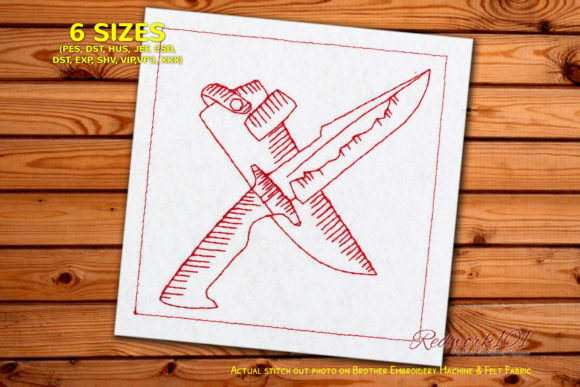
The visual personality of Hunting Knife Bluework leans toward classic Americana and rugged utility. Unlike many novelty designs that rely on excessive fill stitch areas or chaotic shading, this design utilizes a cleaner line-art approach typical of bluework styles. For an embroidery designer, this is often a relief. It suggests a lower stitch count and faster run times, which directly impacts profitability for commercial embroidery projects. The mood is sophisticated enough for adult apparel but distinct enough to serve as a recognizable emblem on gear.
When considering this for a handmade product, the design reads well at various scales. It does not look like a generic clip-art paste; instead, it has a deliberate stitching personality. The interplay between the knife blade and the sheath creates natural negative space, which is crucial when embroidering on textured fabrics like canvas tote bags or denim aprons. This negative space prevents the design from becoming a stiff, bulletproof patch of thread, maintaining the drape and feel of the base fabric.
Performance on Apparel and Accessories
I evaluated Hunting Knife Bluework specifically with a custom order in mind: a series of canvas tote bags and heavyweight sweatshirts for a local hunting club fundraiser. In these scenarios, the design needs to hold its own against coarse weaves and heavy fleece.
For sweatshirt embroidery, the linear nature of bluework is advantageous. Heavy fill stitches can sometimes cause puckering on knit fabrics, even with proper stabilizer. Because this design relies more on running stitch and satin stitch outlines rather than dense blocks, it sits flatter against the garment. This makes it an excellent candidate for left-chest placement on hoodies or as a centered back yoke design. However, because the lines are defining features, thread color contrast becomes paramount. On a dark navy sweatshirt, using a cream or light grey thread will make the details pop, whereas matching thread tones might cause the intricate sheath detailing to get lost visually.
On tote bag designs and aprons, the structural integrity of the embroidery file matters most. These items endure friction and washing. The clean lines of Hunting Knife Bluework reduce the risk of thread breaks during high-speed stitching compared to complex shaded designs. If you are creating embroidered patches for caps or backpacks, this design translates exceptionally well. The defined borders allow for easy merrowing or satin stitch edging when converting the design into a standalone patch format.
Technical Considerations for Small Hoops and Detail
One critical aspect of reviewing any digital embroidery file is assessing its scalability. While Hunting Knife Bluework looks substantial in product photos, designers must verify the minimum viable size. Bluework styles often feature thin connecting lines. If resized too small for a 4x4 hoop size, these running stitches may disappear into the fabric weave or break during wear.
Before committing this design to a baby blanket or kitchen towel, I strongly advise testing on scrap fabric. Kitchen towels, in particular, have a loose terry weave that can swallow fine details. You may need to adjust the stitch density or add a lightweight water-soluble topping to ensure the knife handle details remain crisp. Conversely, if you plan to enlarge the design for a jacket back, check that the satin stitch columns do not exceed your machine’s maximum width. Excessively wide satin stitches can become loopy and snag easily on outdoor gear.
Stabilizer choice is non-negotiable here. For stretchy fabrics, a cut-away stabilizer is essential to prevent the long linear stitches from distorting the garment after washing. For woven camping gear, a tear-away may suffice, but always test first. The optional stitch box mentioned in the product description adds versatility, allowing you to frame the knife as a badge or logo, which enhances brand consistency for Etsy sellers creating themed collections.
Commercial Viability and Product Value
For Etsy sellers and small business owners, the value of an embroidery design lies in its ability to generate sales through professional presentation. Hunting Knife Bluework offers high perceived value because it avoids the amateurish look of poorly digitized stock art. When photographed on a finished product, the clean lines convey quality craftsmanship.
This design is particularly strong for personalized gift markets. It pairs beautifully with monograms or names placed below the sheath. The vertical orientation of the knife allows for efficient hoop usage, leaving ample room for customization without requiring re-hooping. This efficiency is vital for craft fair products where margins are tight. Furthermore, the gender-neutral, rustic aesthetic broadens your target demographic beyond just hunters to include general outdoor enthusiasts, hikers, and campers.
When creating printable mockups for your online listings, this design photographs well due to its high contrast potential. Mockups showing the design on varied substrates—from leather-look vinyl to washed linen—help customers visualize the versatility of the finished product. Just remember to respect the licensing terms found on the Creative Fabrica product page. Ensuring you have the correct commercial license protects your business and builds trust with buyers who value ethical sourcing.
Practical Notes for Embroidery Success
To get the best results from Hunting Knife Bluework in a production environment, keep these practical tips in mind:
- Verify File Details: Always confirm the specific hoop size requirements and included formats before purchasing. Not all machines read every file type natively.
- Thread Contrast Testing: Stitch out samples on both light and dark fabrics. Bluework relies on line definition; poor contrast ruins the effect.
- Needle Selection: Use a sharp needle (75/11) for woven fabrics to pierce cleanly between threads, preserving the crispness of the running stitches. A ballpoint may push fibers aside, making lines look jagged.
- Tension Checks: Linear designs reveal tension issues instantly. Ensure your bobbin tension is balanced before starting a batch run to avoid looping on the underside of the knife outline.
- Design Placement: On curved surfaces like caps, rotate the design slightly if necessary to follow the curve of the brim, preventing distortion of the straight blade edge.
Final Thoughts for Makers
Hunting Knife Bluework stands out as a reliable, versatile asset for embroidery professionals. It bridges the gap between niche hunting apparel and broader camping aesthetics without sacrificing technical stitch quality. Whether you are producing custom apparel, stocking up for holiday craft fairs, or expanding your digital product offerings with unique design assets, this file offers a solid foundation. By paying attention to stabilizer selection, fabric texture, and thread contrast, you can transform this digital file into a premium handmade product that resonates with outdoor enthusiasts and generates repeat business.